Research in behavioral economics shows that humans often rely on instinctive, rapid judgments when faced with uncertainty. According to Daniel Kahneman’s work on decision-making, these “System 1” responses are fast, emotional, and prone to bias. In multiplayer item wagering communities, where outcomes are determined in seconds, this psychological tendency becomes central to the experience.
Platforms that allow players to play MM2 coinflip online illustrate how digital environments amplify the speed of decision-making. The wager is placed, the outcome is revealed almost instantly, and the emotional response follows without pause. Unlike traditional gambling formats that may involve longer waiting periods, these communities thrive on immediacy, creating a unique psychological landscape.
Instant-Decision Environments
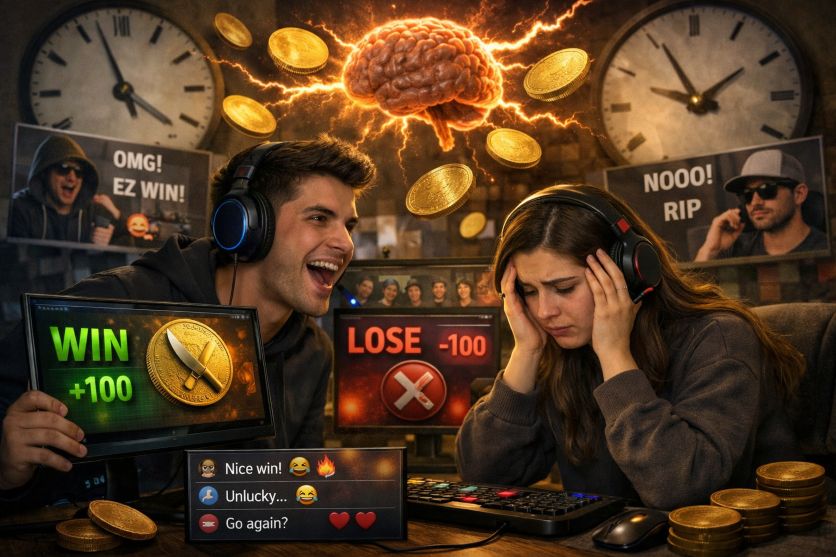
Multiplayer wagering communities are built around rapid exchanges. A coinflip, a spin, or a quick draw of digital items happens in seconds. This immediacy mirrors the fast-paced nature of online gaming itself, where reflexes and quick choices define success. The difference is that here, the stakes are tied to virtual possessions or currency, and the decision-making process is compressed into a moment of anticipation.
Studies from the University of Cambridge’s Behavioural and Clinical Neuroscience Institute highlight that fast outcomes increase dopamine activity, reinforcing the cycle of engagement. The shorter the gap between action and result, the stronger the reinforcement loop becomes. In wagering communities, this loop is central to why players return repeatedly, even when outcomes are unpredictable.
Emotional Impact of Rapid Outcomes
The emotional intensity of instant outcomes cannot be understated. A win or loss in a matter of seconds creates sharp highs and lows. Unlike slower forms of gambling, where anticipation builds gradually, the emotional impact here is immediate and often overwhelming. This can lead to what psychologists call “emotional volatility,” where mood swings are tied directly to rapid sequences of outcomes.
Research published in the Journal of Gambling Studies notes that rapid-play formats are more likely to trigger impulsive behavior compared to slower games. The emotional surge following a quick outcome can cloud judgment, leading to repeated wagers in an attempt to replicate or recover from the feeling. In community settings, these emotions are often shared, magnified by group reactions and peer influence.
Community Habits and Behavioral Patterns
Multiplayer wagering communities are not just about individual decisions; they are shaped by collective behavior. Forums, chat groups, and live streams create spaces where outcomes are celebrated, debated, and analyzed. This social layer adds another dimension to the psychology of split-second decisions. Players are not only reacting to their own outcomes but also to the visible experiences of others.
Patterns emerge in these communities. Some players develop rituals—always wagering at certain times, or following perceived “hot streaks.” Others adopt observational habits, studying how peers react before making their own choices. These behaviors mirror broader gaming culture, where community validation and shared experiences are central to engagement. The wagering element simply intensifies the stakes of those interactions.
At the same time, the communal aspect can normalize risk-taking. When losses are shared and wins are celebrated publicly, the perception of risk shifts. According to McKinsey’s analysis of digital consumer behavior, peer influence in online communities often reduces individual caution, as collective excitement outweighs personal hesitation. In wagering environments, this dynamic can encourage repeated participation even when outcomes are unfavorable.
Healthier Approaches to Engagement
Recognizing the psychological impact of split-second wagering is the first step toward healthier engagement. Communities can benefit from introducing pauses or cooldowns between wagers, allowing players time to reflect before making another decision. Research from the Responsible Gambling Council suggests that enforced breaks reduce impulsivity and help players regain perspective.
Another approach is fostering transparency and education within communities. Discussions that highlight the randomness of outcomes and the risks involved can counteract the illusion of control. Insights into the rise of money-making apps in gaming show how digital ecosystems increasingly blur the line between entertainment and profit, reminding players to treat wagering as recreation rather than a financial pursuit. Encouraging players to view these activities as social experiences helps maintain balance and perspective.
Players themselves can adopt personal boundaries. Setting limits on time or value spent in wagering activities creates a buffer against emotional volatility. Engaging with communities for social interaction rather than purely for wagering outcomes can also shift focus toward connection rather than risk. These small adjustments can make participation more sustainable and less emotionally taxing.
Conclusion
Split-second decisions in multiplayer item wagering communities highlight the intersection of psychology, emotion, and social behavior. The immediacy of outcomes creates powerful emotional responses, while community dynamics shape habits and normalize risk. Yet with awareness and structured approaches, engagement can remain balanced. Treating these environments as spaces for entertainment and social connection, rather than financial gain, is essential.
Responsible gambling practices remind us that rapid outcomes carry risks. Emotional volatility, impulsive behavior, and peer influence can all intensify the experience. By setting boundaries and fostering transparency, communities can evolve into healthier spaces where the thrill of instant decisions is tempered by reflection. In the end, wagering communities reflect the broader culture of gaming—fast, social, and immersive—but they require conscious effort to ensure that participation remains safe and enjoyable.
Risk Warning: Gambling, including item wagering, carries financial and emotional risks. Participation should always be approached with caution, limits, and awareness of potential harm.